
Meta: Community Notes waitlist onboarding
In 2025, Meta introduced Community Notes as a way for people to better identify and label posts that are misleading or missing context. For the product experience to work, Meta needed users who met certain requirements to sign up as contributors to both write and rate notes written by others. Six months after the initial soft launch, I joined the team to drive contributor acquisition levers.
Objective
Drive key acquisition levers and increase the number of contributors on Community Notes
Challenges
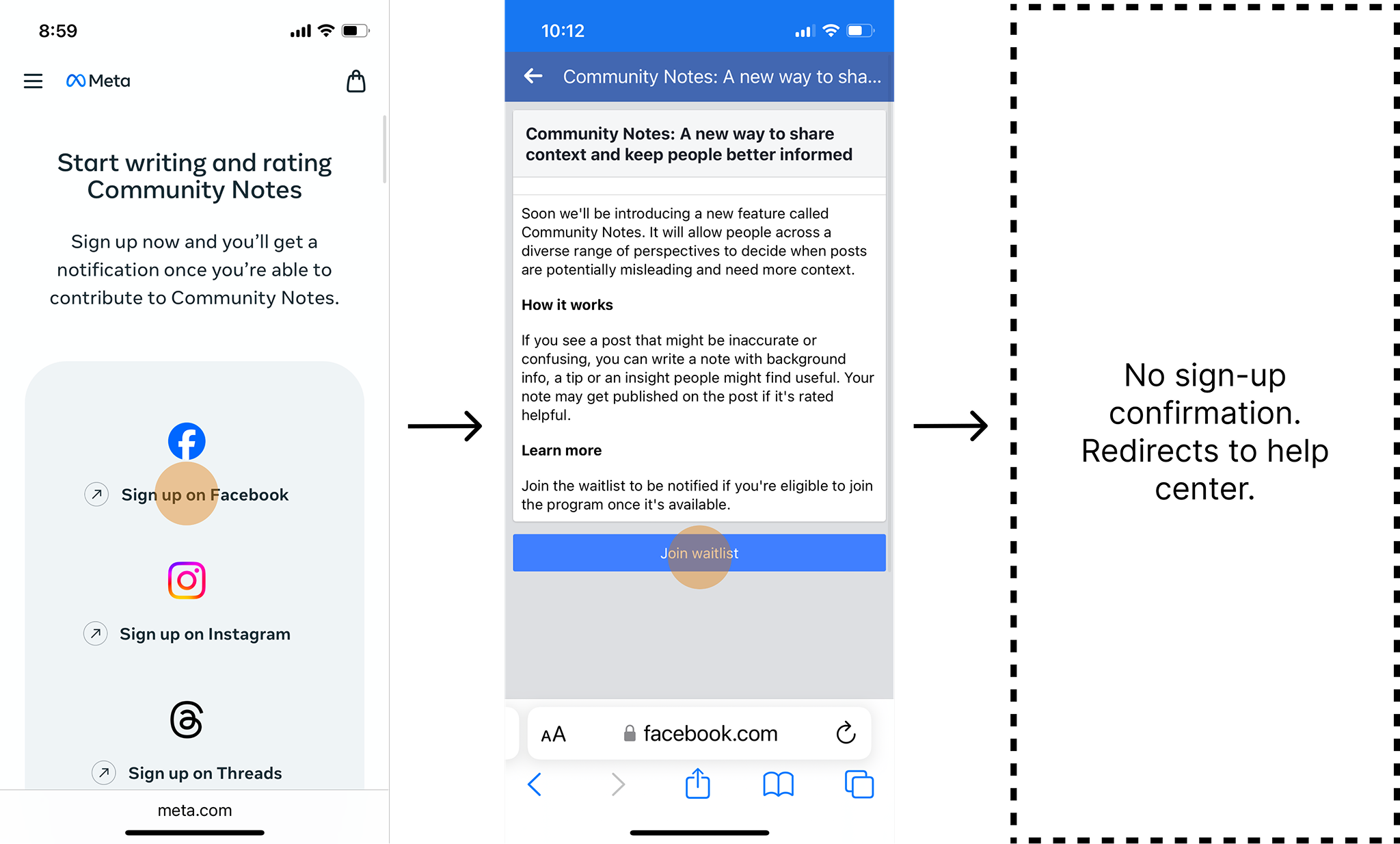
Waitlist sign up lived on a help page outside the apps, so the people most likely to contribute never encountered it
Contributors had to understand an unfamiliar program — eligibility, writing notes, rating others' notes — before committing
The experience had to work across Facebook, Instagram, and Threads, each with its own design team
My role
Brainstormed multiple options for increasing contributor sign ups and prioritized waitlist onboarding redesign
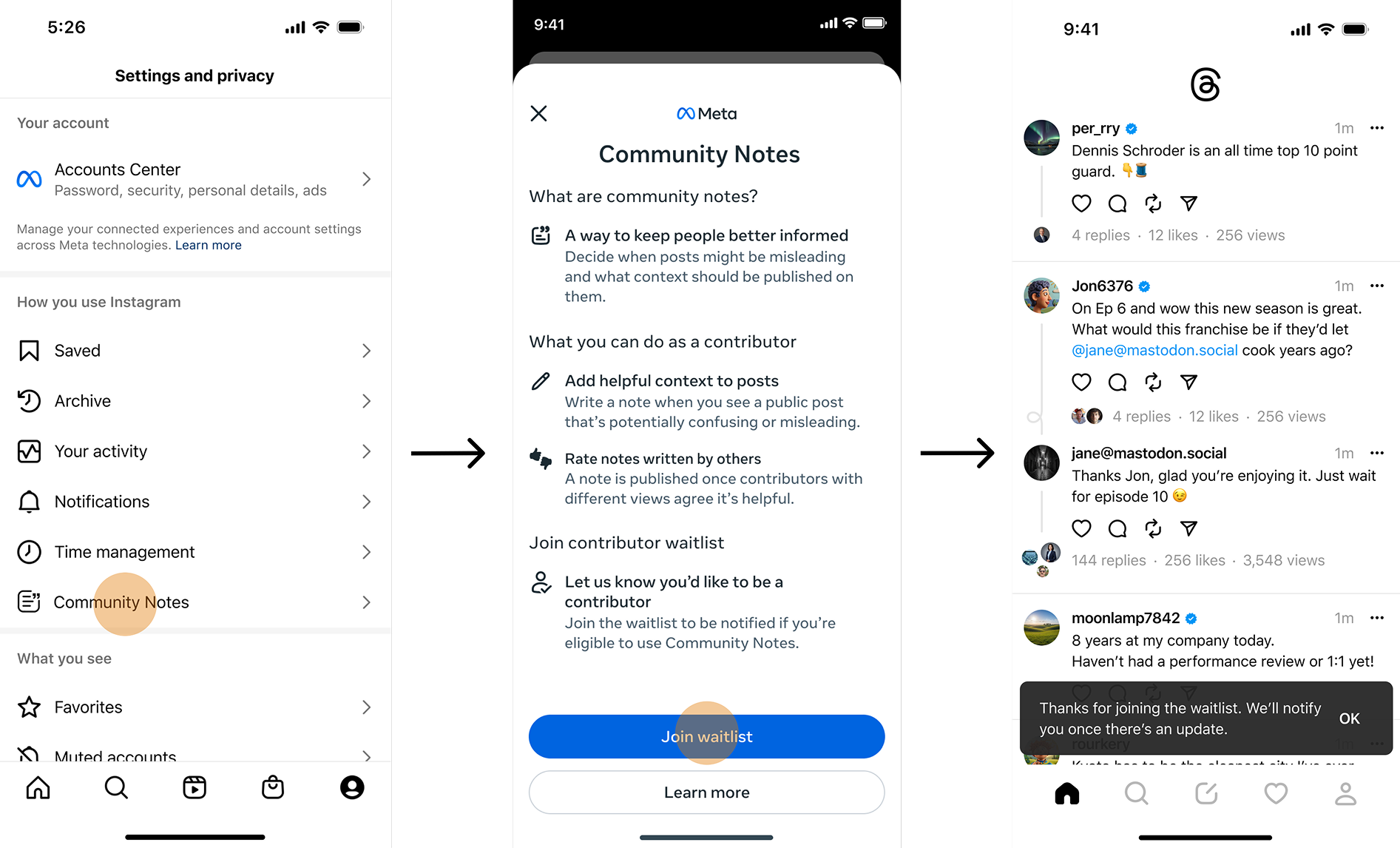
Designed, mocked and wrote all copy for new in-app experience for onboarding to Community Notes
Redesigned the waitlist landing page from a buried help-page-only experience to an in-app accessible surface — setting the user experience direction across all apps
Coordinated designers across Facebook, Instagram and Threads to align on the unified, in-app sign-up experience
Designs
In the following mocked designs, see how the waitlist experience went from a content-heavy browser experience to a simplified in-app experience that explained the role of a contributor cleanly and concisely
Original design: Waitlist sign up via browser
Final design: Waitlist sign up via Threads
Impact
In-app access points became key Community Notes sign up channels — solving a systemic accessibility problem in contributor onboarding and driving a fundamental shift in how contributors discover and join the program.